
Captain Deep logo Captain Deep

Captain Deep

Deep-Sea Life

Welcome to a realm where sunlight never reaches and life takes extraordinary forms. Deep-Sea Life reveals the strange and fascinating inhabitants that dwell below crushing pressures and frigid currents—each species adapted for survival in utter darkness.

01

Bioluminescence: Nature’s Neon Glow

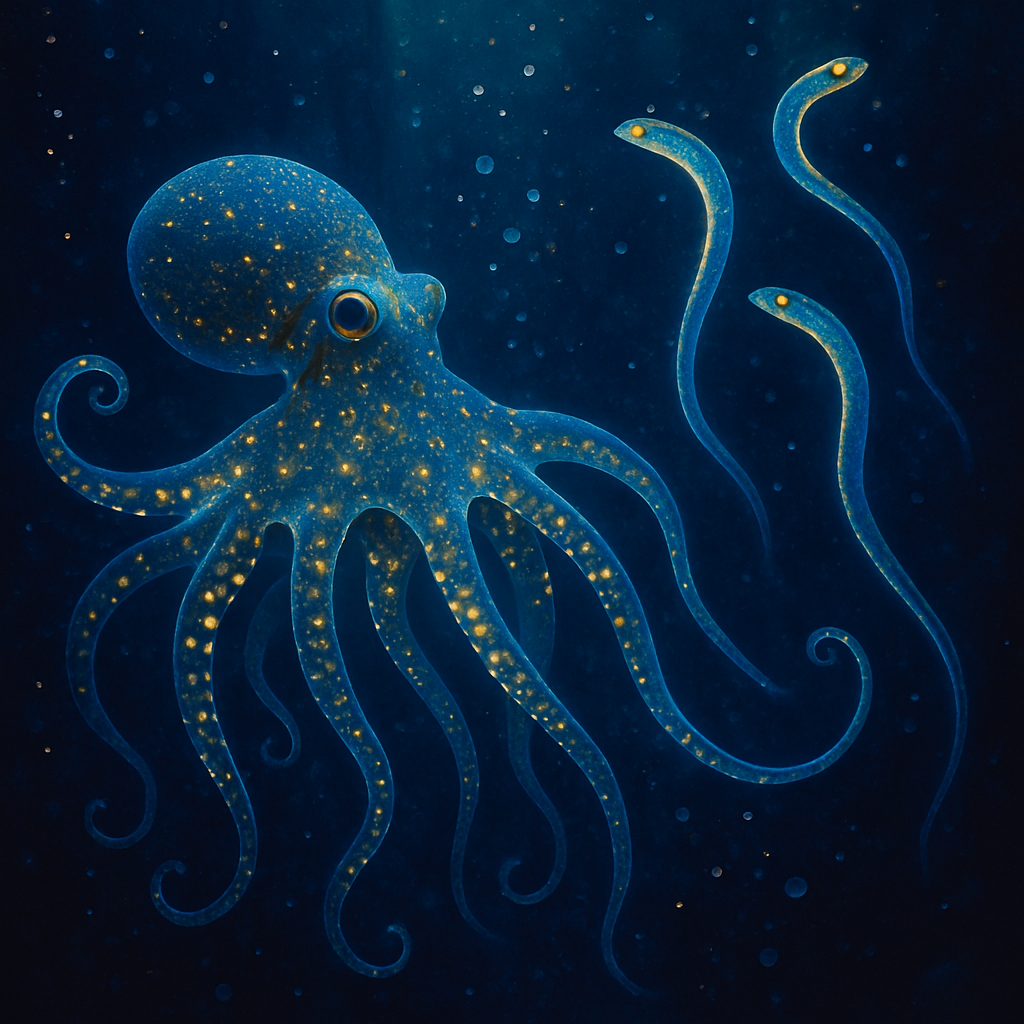
In the unending night of the deep ocean, light becomes a matter of life and death. Many creatures produce their own glow through bioluminescence, creating brilliant displays for luring prey, confusing predators, or finding mates. From the star-like twinkles of lanternfish to the ghostly orbs of comb jellies, these natural lights turn the darkness into a living galaxy. Understanding bioluminescence reveals both its evolutionary advantages and its sheer beauty—a hidden light show that few humans ever see.

02

Pressure-Proof Marvels

The deep ocean is a world defined by extremes: immense pressure, freezing temperatures, and pitch-black surroundings. Here, strange marvels evolve: the gelatinous bodies of hagfish, elastic skin of deep-sea octopuses, and flexible skeletons of snailfish. Studying these adaptations helps scientists unlock secrets about biology and resilience, with implications for everything from medicine to material science.

03

Strange Shapes & Unusual Behaviors

The variety of deep-sea creatures boggles the imagination. Meet the gulper eel, with its expandable mouth, or the feathery appendages of the yeti crab. Some species never see the sun, while others migrate thousands of meters each night. This vast menagerie thrives against all odds, illustrating the incredible inventiveness of life in an alien world.

04

Conservation in the Abyss

Even in the most remote depths, human impact encroaches. Deep-sea trawling, mining, and climate change threaten fragile, slow-growing ecosystems. By shining a light on deep-sea life, we champion the need to protect these rare and often overlooked inhabitants—guardians of biodiversity, knowledge, and wonder.

Quick tips

Good to know

  • Look for bioluminescent displays in deep-sea documentaries.
  • Compare adaptations between deep- and shallow-water species.
  • Seek museum specimens with preserved deep-sea fish.
  • Read up on hydrothermal vent ecosystems.
  • Support ocean conservation groups.